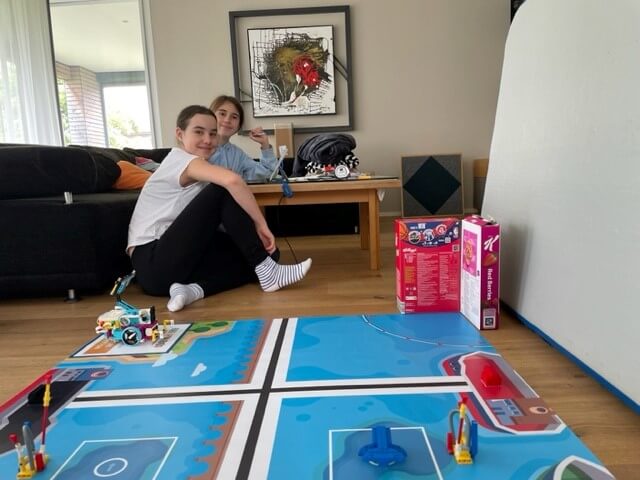


During the sports vacations, I (Valeri) went skiing and in the evening I took a look at the “Spike” programming language. Of course, we (my father and I) tried out a few things to see which commands are responsible for what.
After the vacations, I struggled to get the robot to run smoothly on the line.
With 2 sensors, each running on white, it worked. We have since tried another variant with one sensor. That now works well. Sophia and I also had the feeling that the robot would be too wide if we had to add more parts.
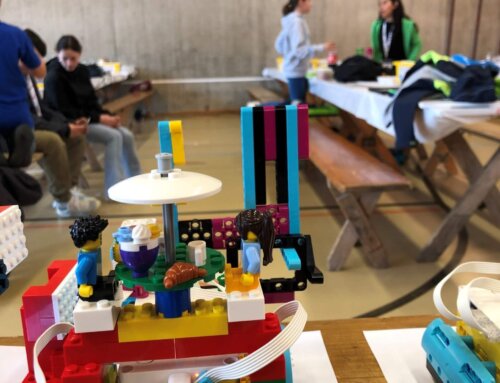
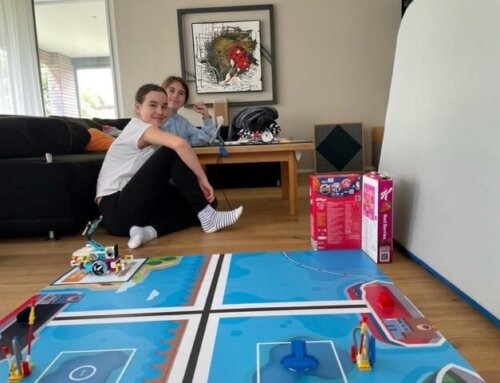
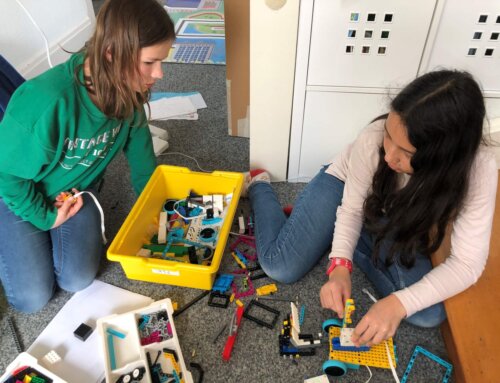
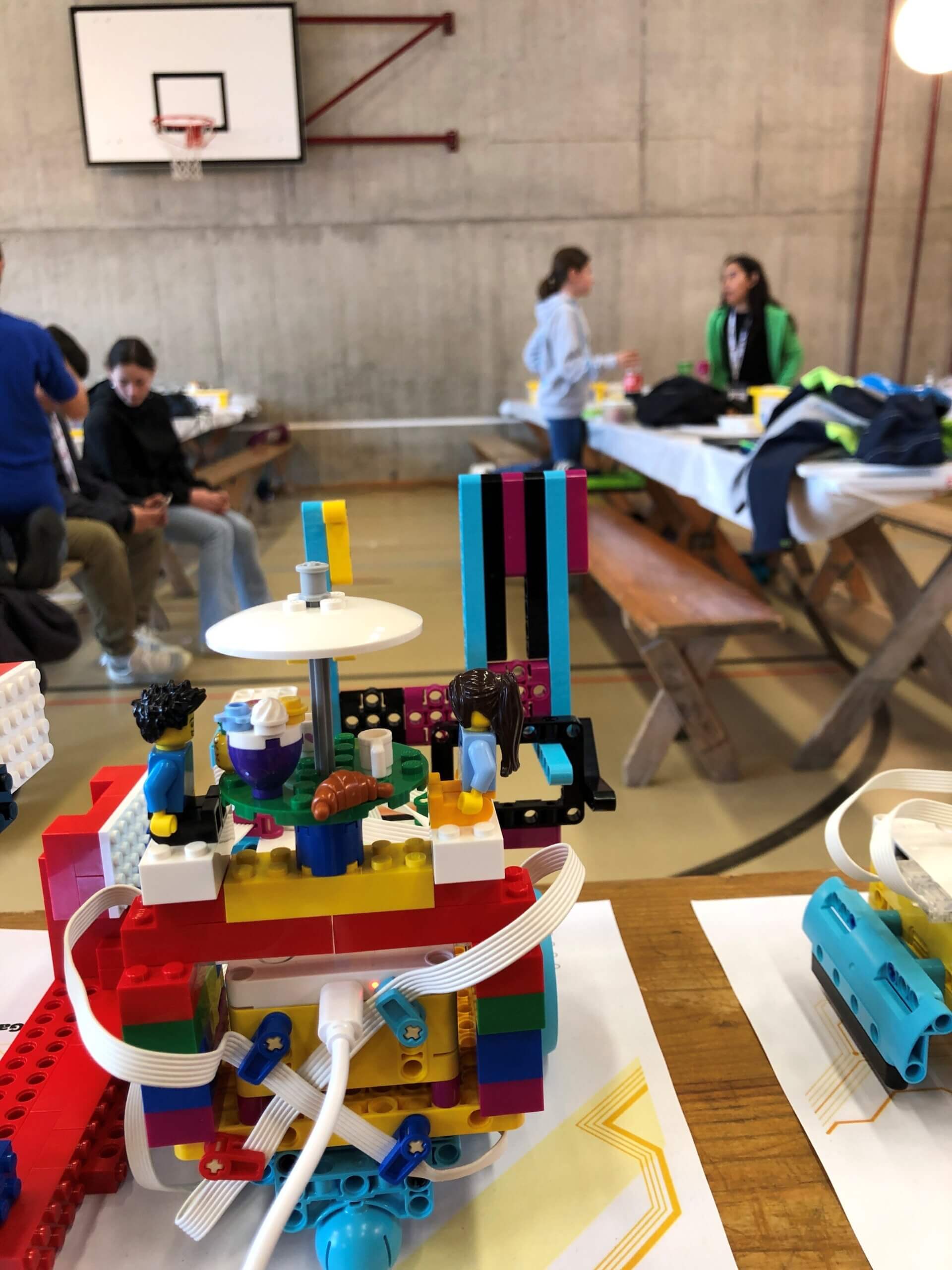
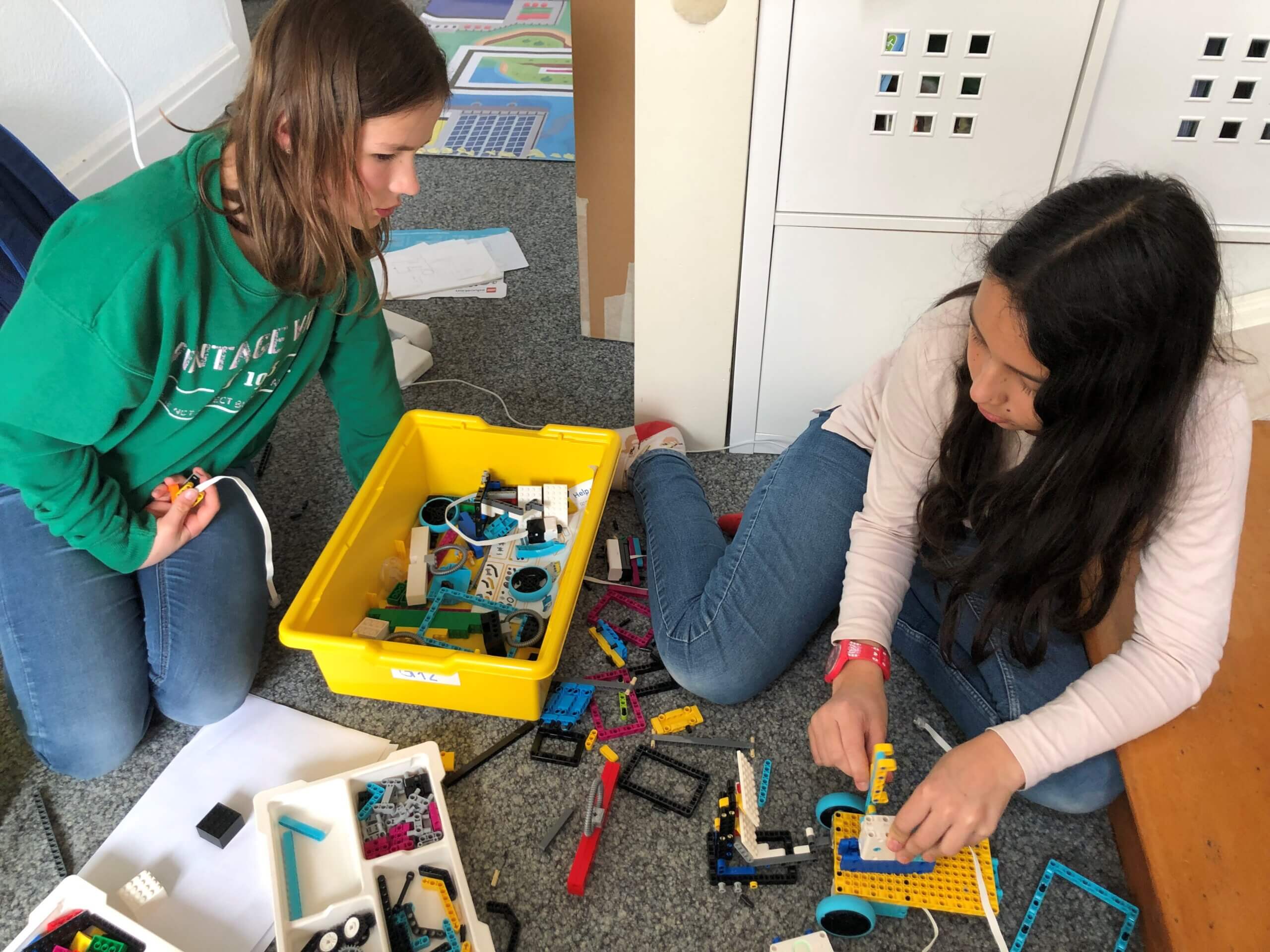
We initially installed the lift crosswise, then we installed it lengthwise and optimized the lifting fork. We then realized that we had to change all the parameters in our program so that the robot would travel the right distance. One weekend we programmed the whale rescue from a field. The program runs really well. The second block we worked on was coral placement. We had to try several times until we got the lowering of the lifting fork right. Once, I changed the wrong parameter during troubleshooting and the whale broke during the next attempt – we laughed. This mistake was quickly reversed.
We have drawn up a project plan showing which subtasks should be completed in which week. We also write things in this folder that we have to remember. For example, that the robot is charged as much as possible. Because if it gets tired because it doesn’t have enough power, it makes strange mistakes that we can’t find.
We want to have the coral placement for all fields ready by the end of next week.
We are confident that this will work.
Note from WRO CH: We have shortened your video. It’s a really great video and it shows that you’ve made huge progress. The reason for shortening it is that we don’t want to reveal too much to other teams about how you built your robot and what your strategy is for solving the task. We will upload the full video after the Swiss final.