

This text serves as a media release and may be used provided the source is acknowledged.
Gold and bronze medals for Swiss teams in the innovation category at the European robotics competition
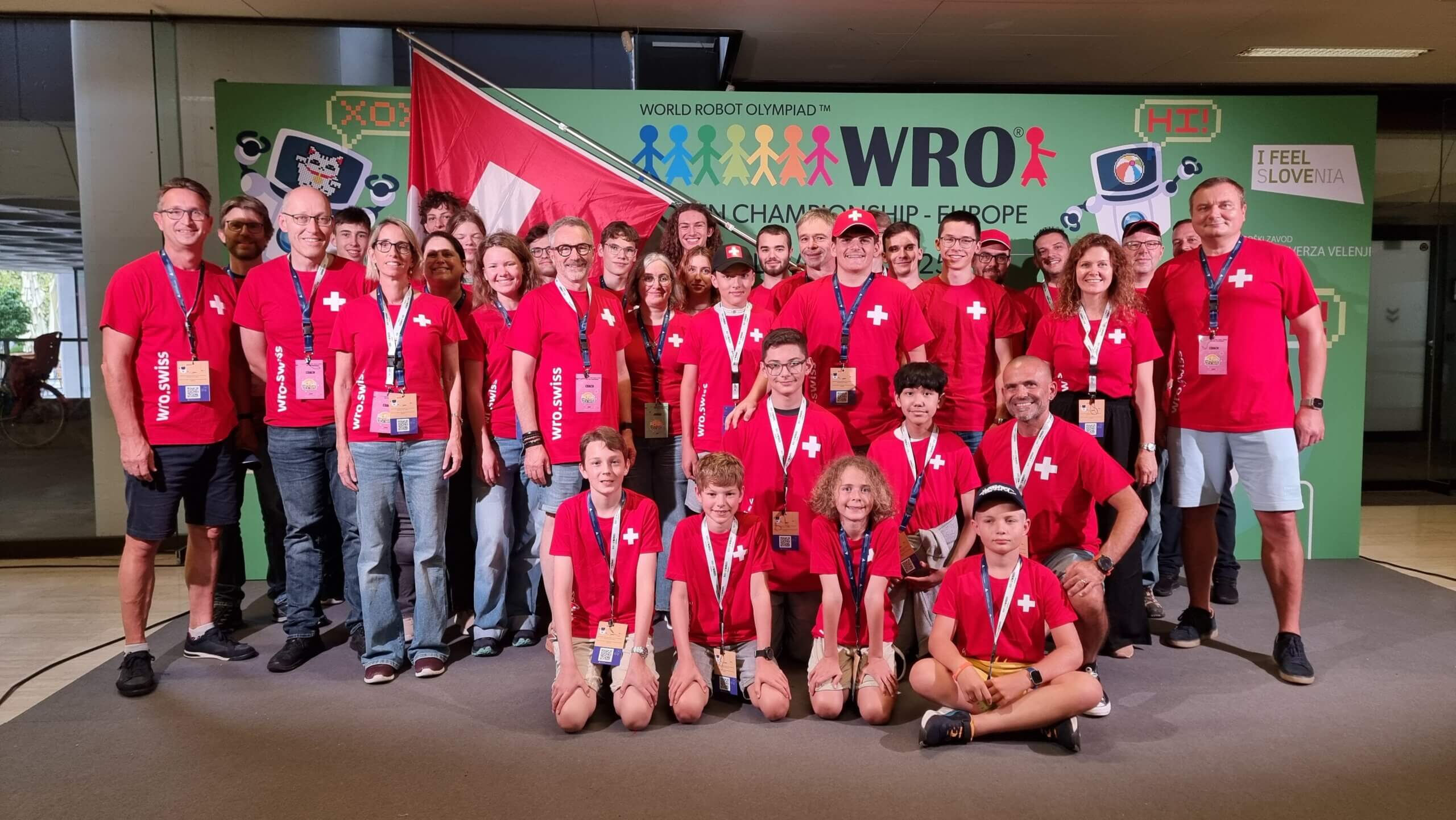
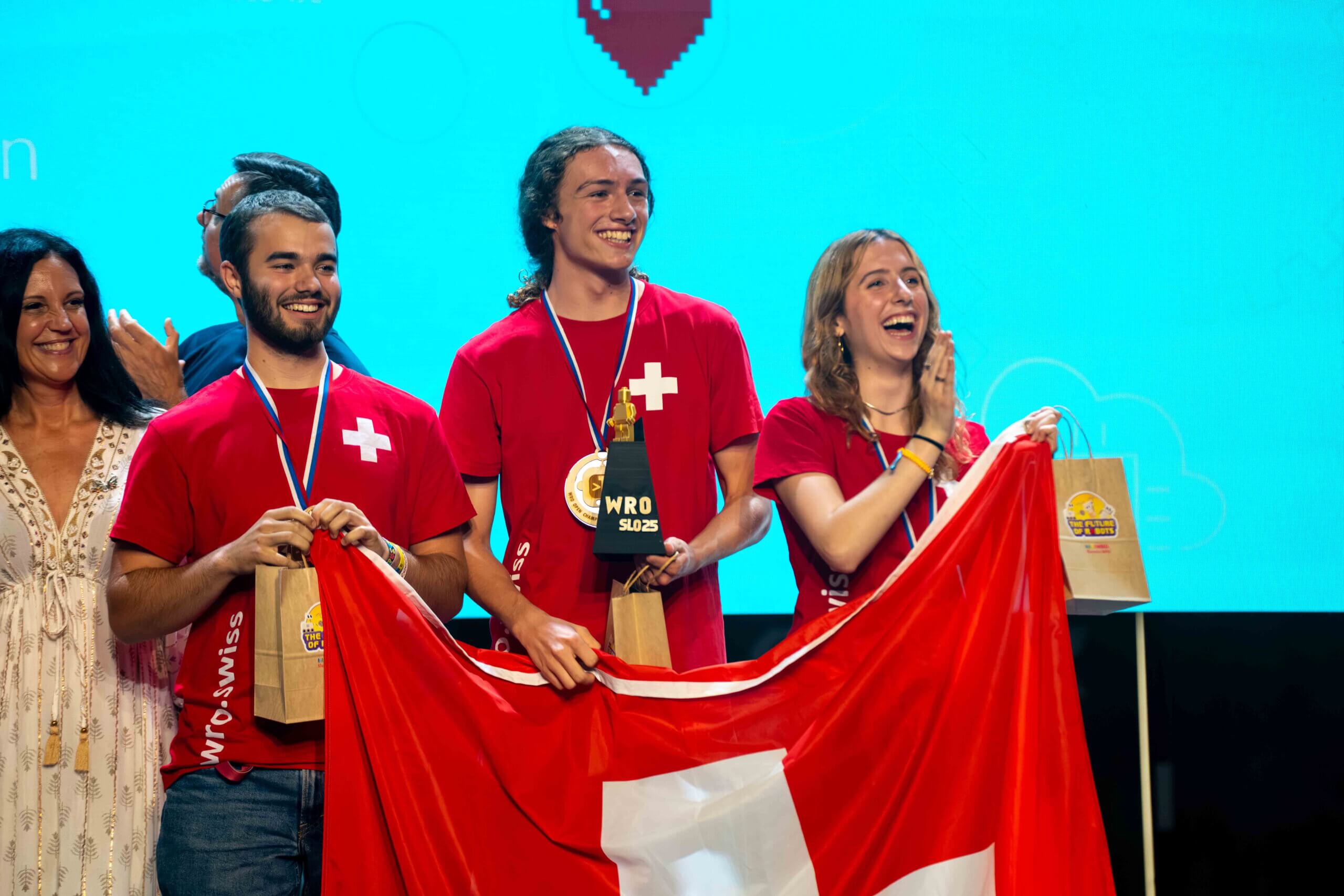
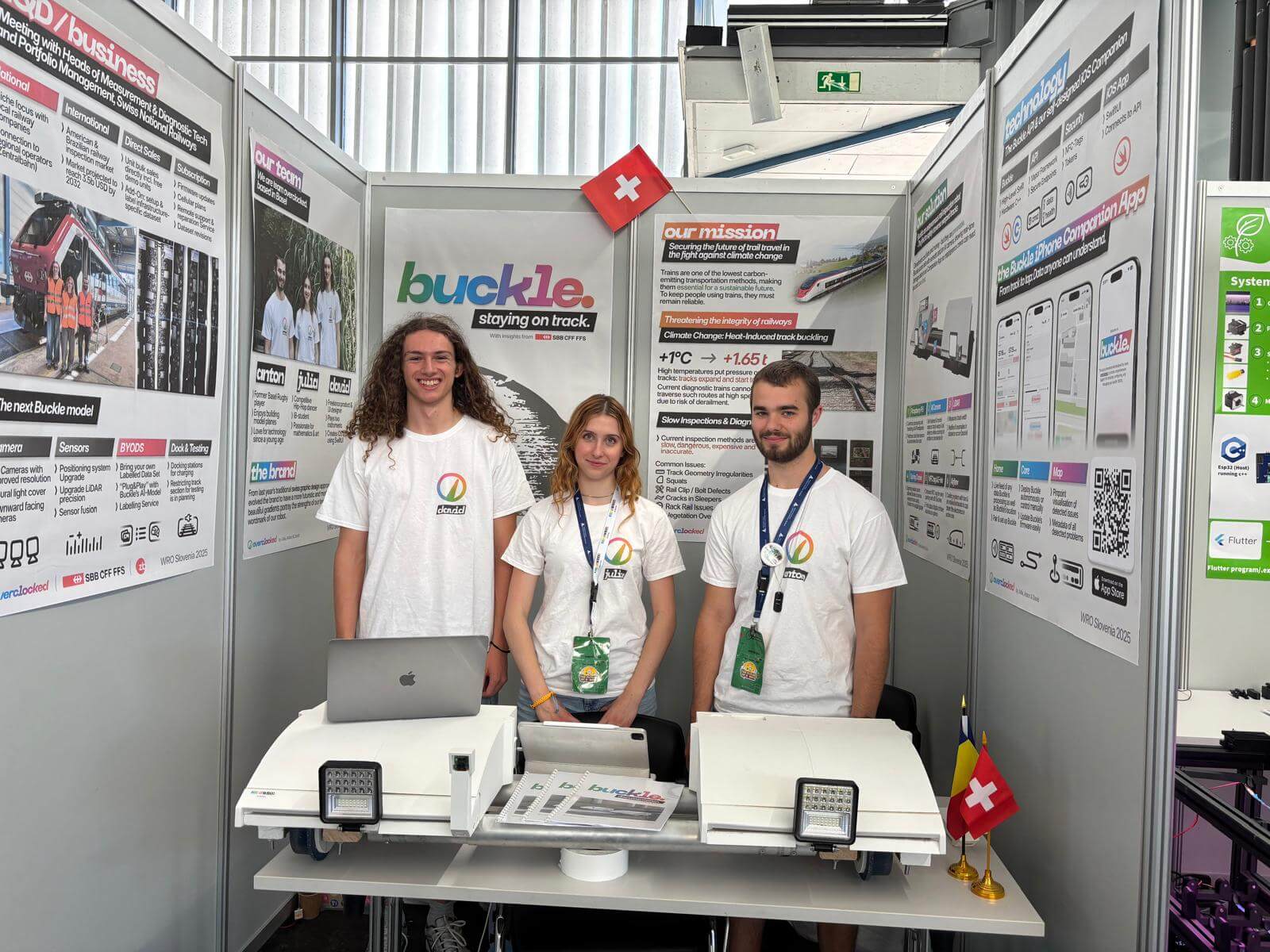
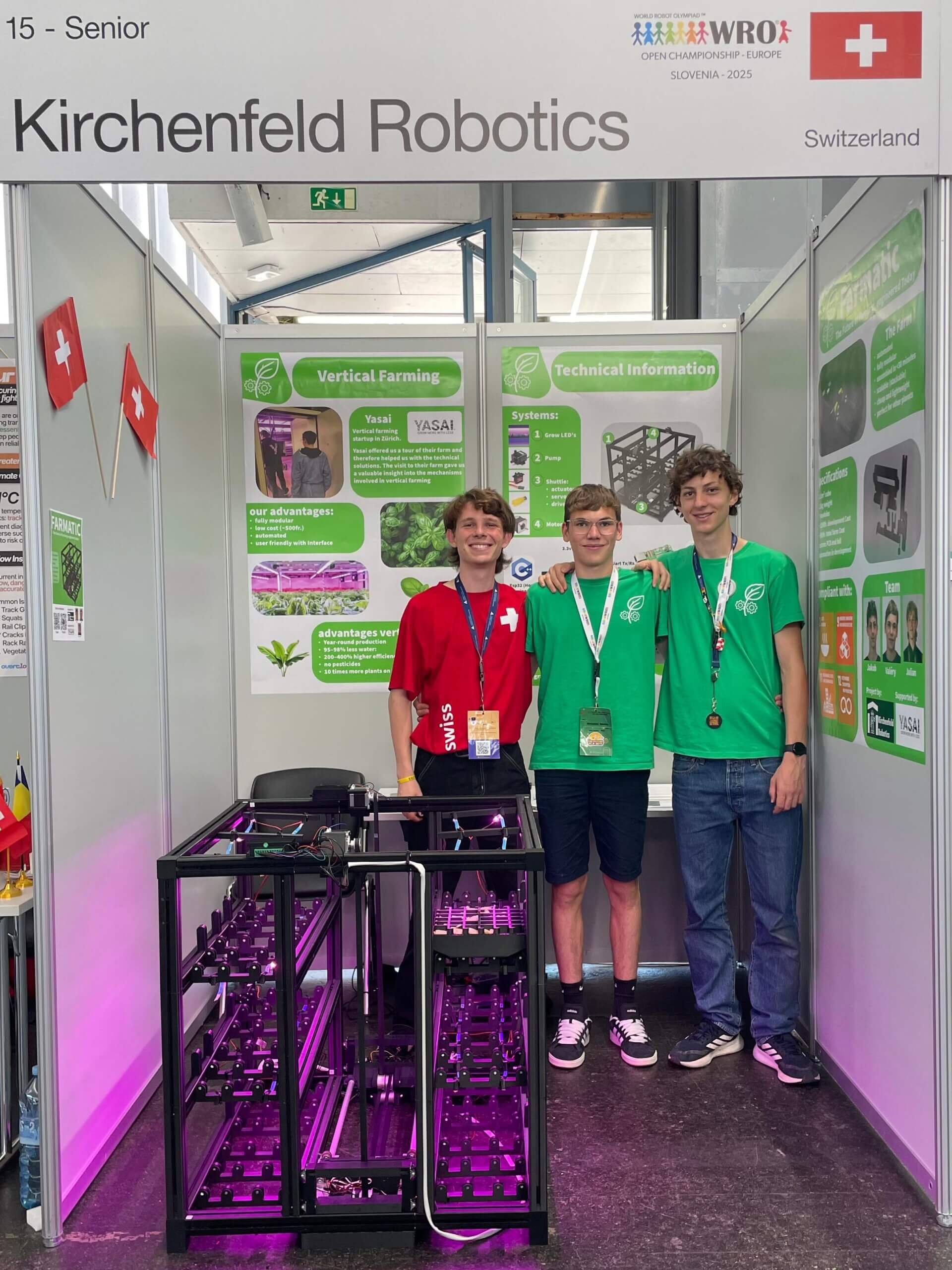
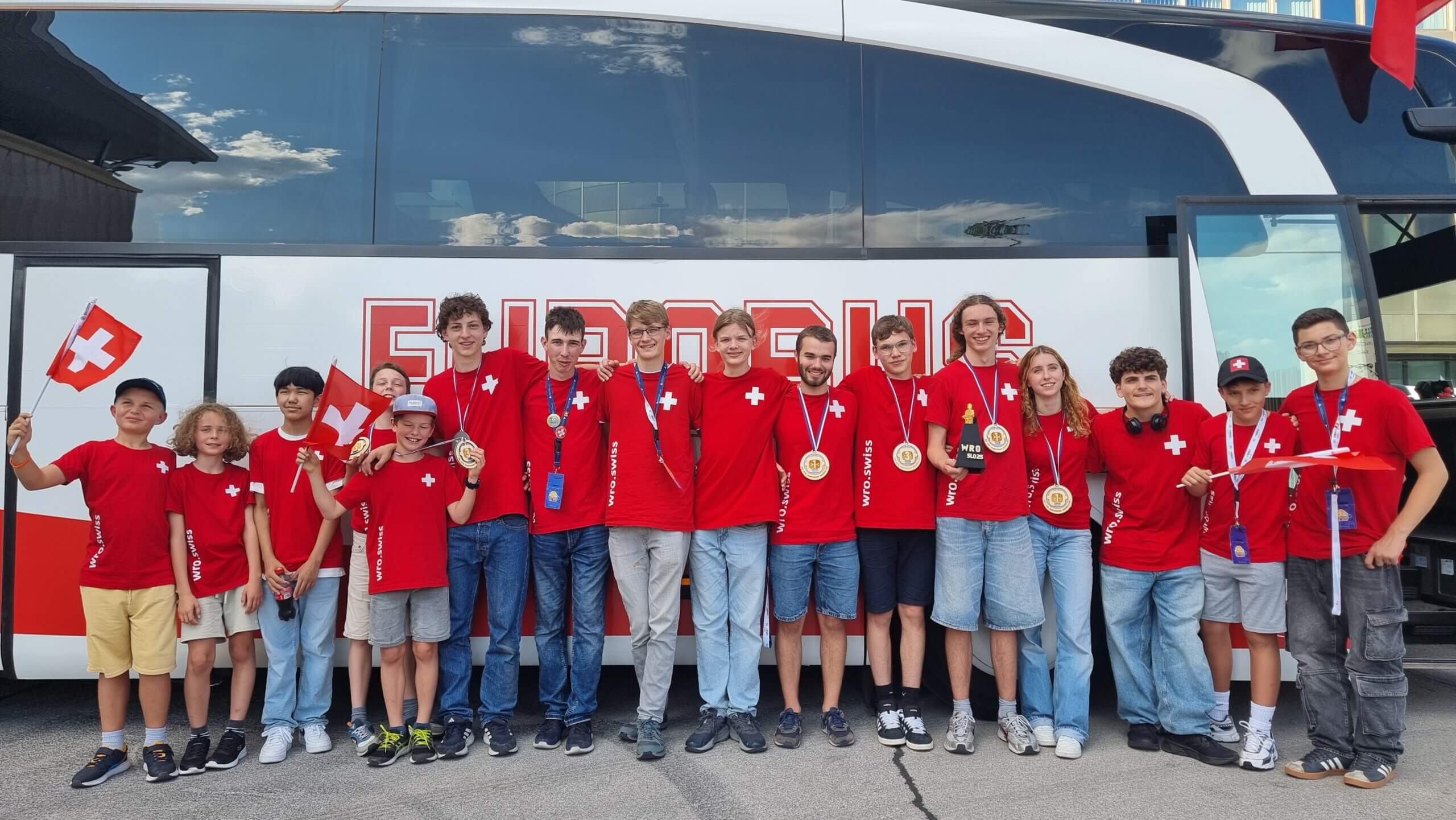
Eight young Swiss teams took part in this year’s World Robot Olympiad Open Championship competition in Ljubljana from September 2-5, together with over 300 other children and young people. Switzerland did particularly well in the still young “Future Innovators” category, where both teams that made the trip achieved a podium place – the “overclocked.” team from Basel won 1st place, while the “Kirchenfeld Robotics” team from Bern came 3rd.
Each team consists of two to three children or young people who are accompanied by a coach. Since the competition tasks were published in mid-January, the teams have been able to prepare intensively for the challenges and qualify for participation via Regional Competitions and the Swiss Final, developing their solutions step by step.
Task topic: The Future of Robots
The inspiring motto for the 2025 season was “The Future of Robots”. This year, teams from all over the world explored how robotics can help to overcome global challenges and improve our daily lives. Whether in the design of smart cities, in the exploration of space or through the use of AI-controlled robots in various areas of life.
Future Innovators: Innovative robot prototypes
In the “Future Innovators” category, the teams had to develop a functioning robot prototype for a real-life problem and present their work to a jury at the competition. The “overclocked.” team impressed the judges convinced the jury the most with their project “buckle.”, an autonomous rail inspection robot for detecting defects, and won the gold medal in their age group. Team member David Bänziger names the following highlights of their product: “The completeness and immediate operational capability of the robot. Switching it on starts all systems automatically and activates all network services – our specially developed iPhone app connects directly for a live data stream so that all components can be monitored in real time, software updates can be applied automatically and data from autonomous mission runs can be analyzed from anywhere.”
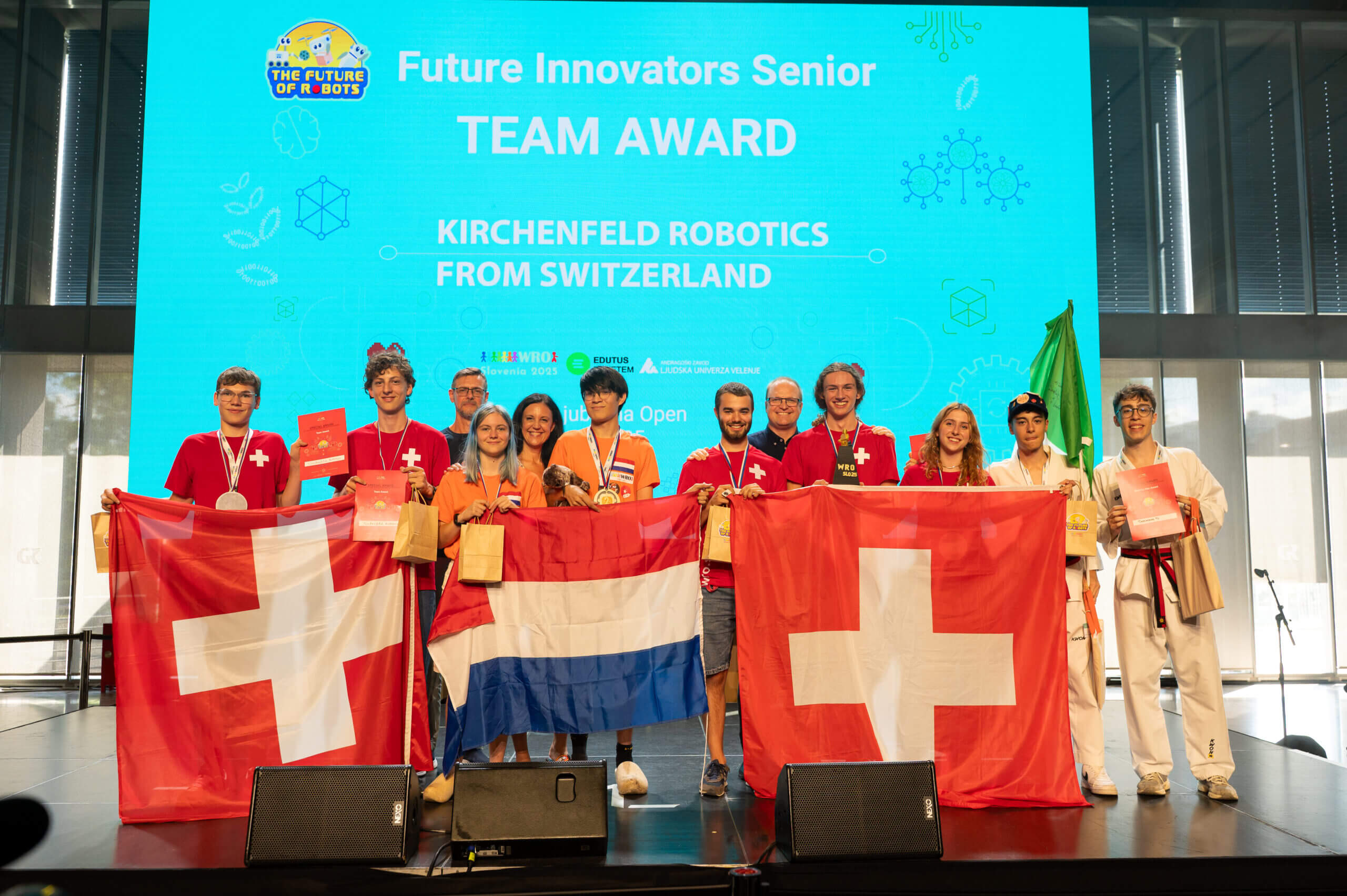
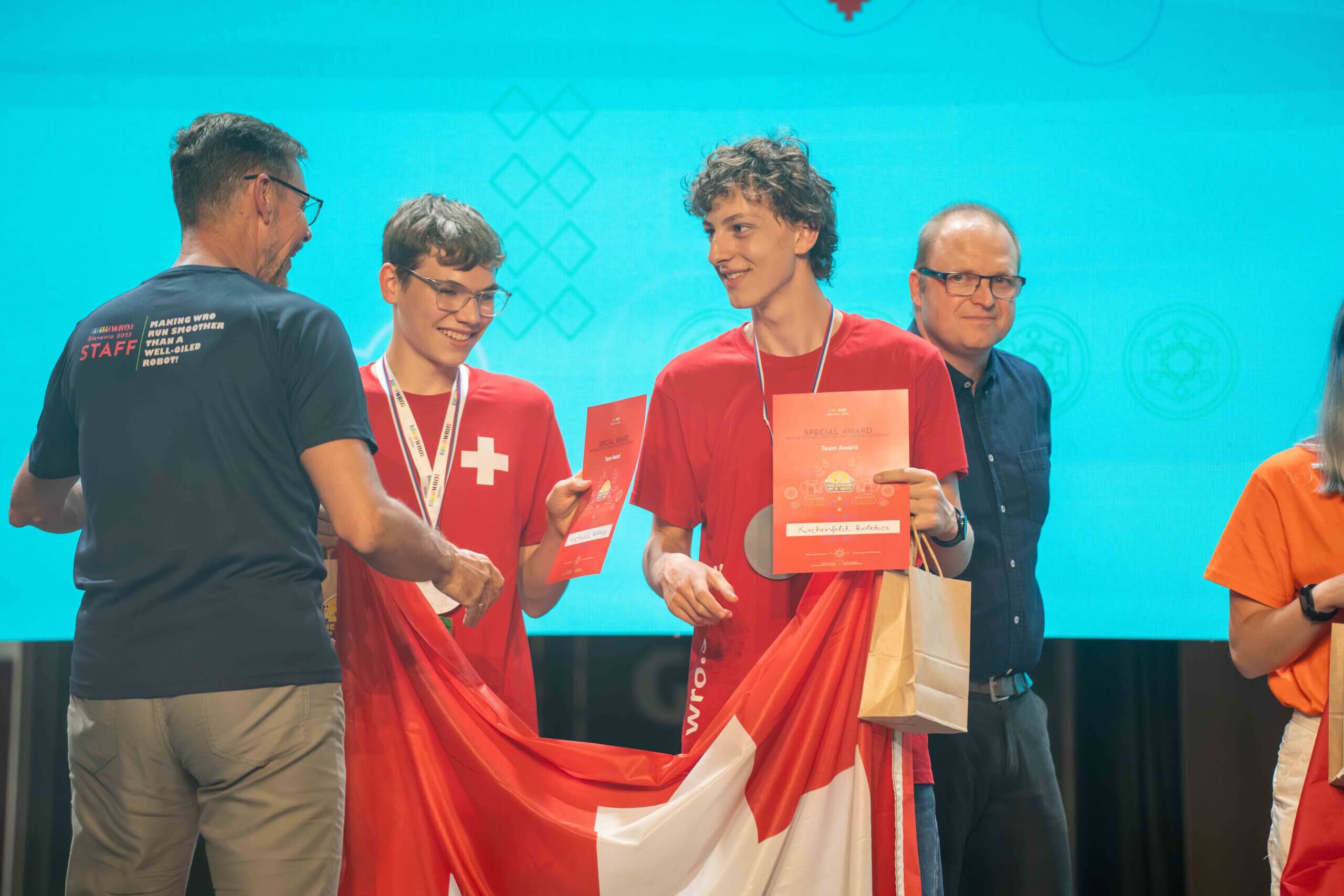
The “Kirchenfeld Robotics” team also made it onto the podium in third place with their “Farmatic” solution for a fully automated, modular vertical farm. The team also received the “Team Award”, which means that their project was the best received by the other teams in their category. In addition to the creativity and functionality of the robot, the jury also assessed whether the team had thought about the social impact of their invention or how their product could reach market maturity.
RoboMission: Space missions on the game field
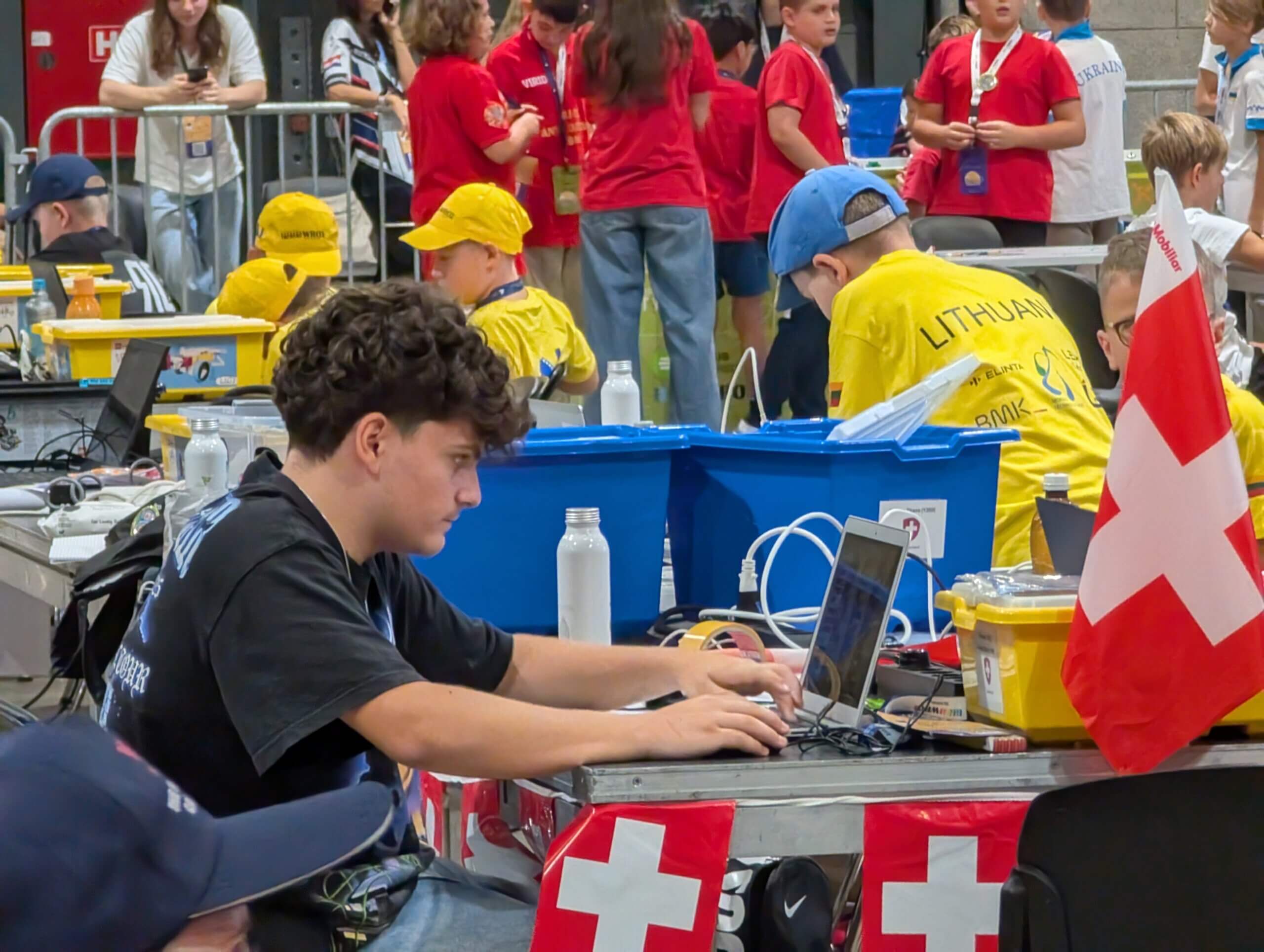
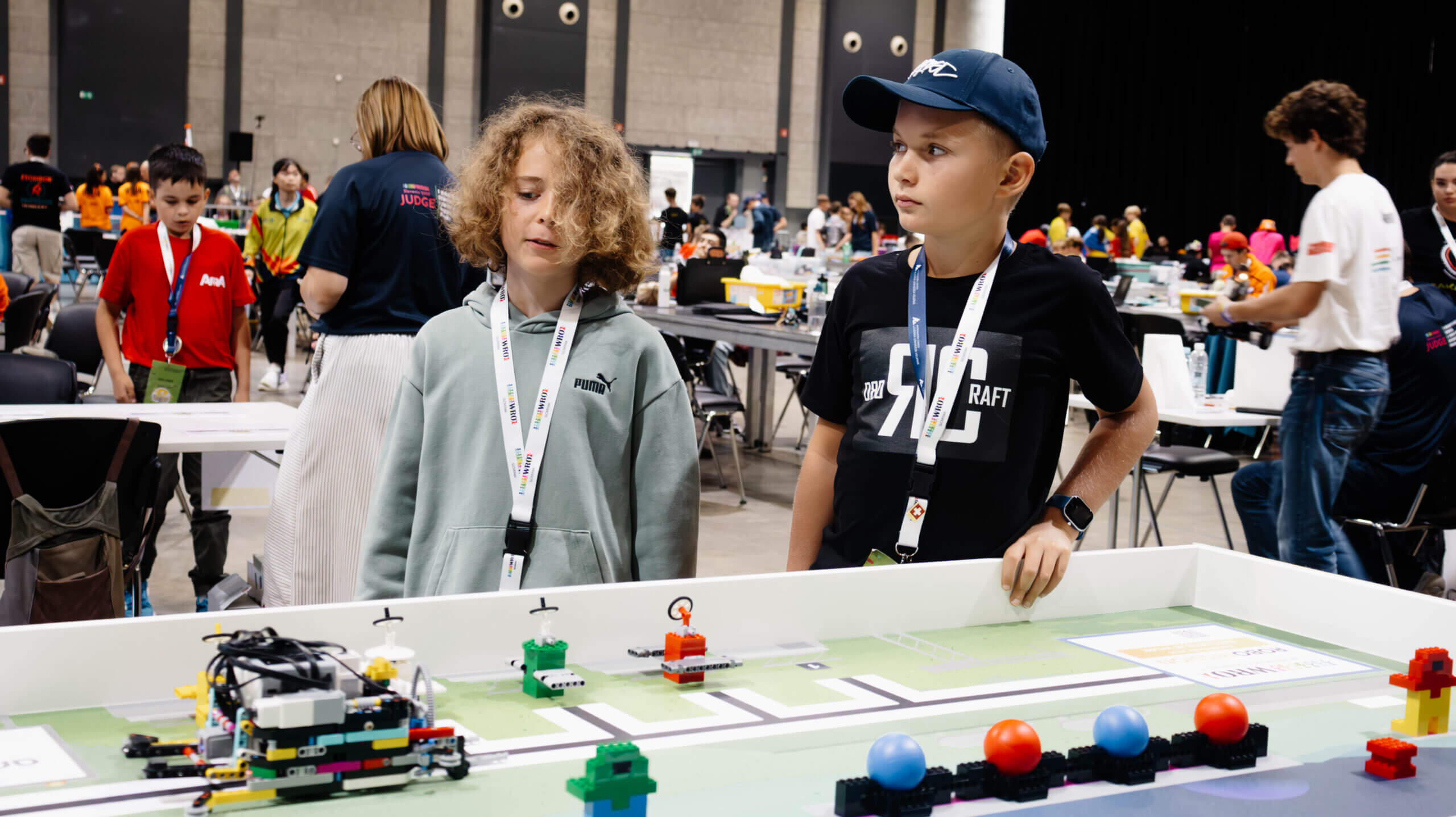
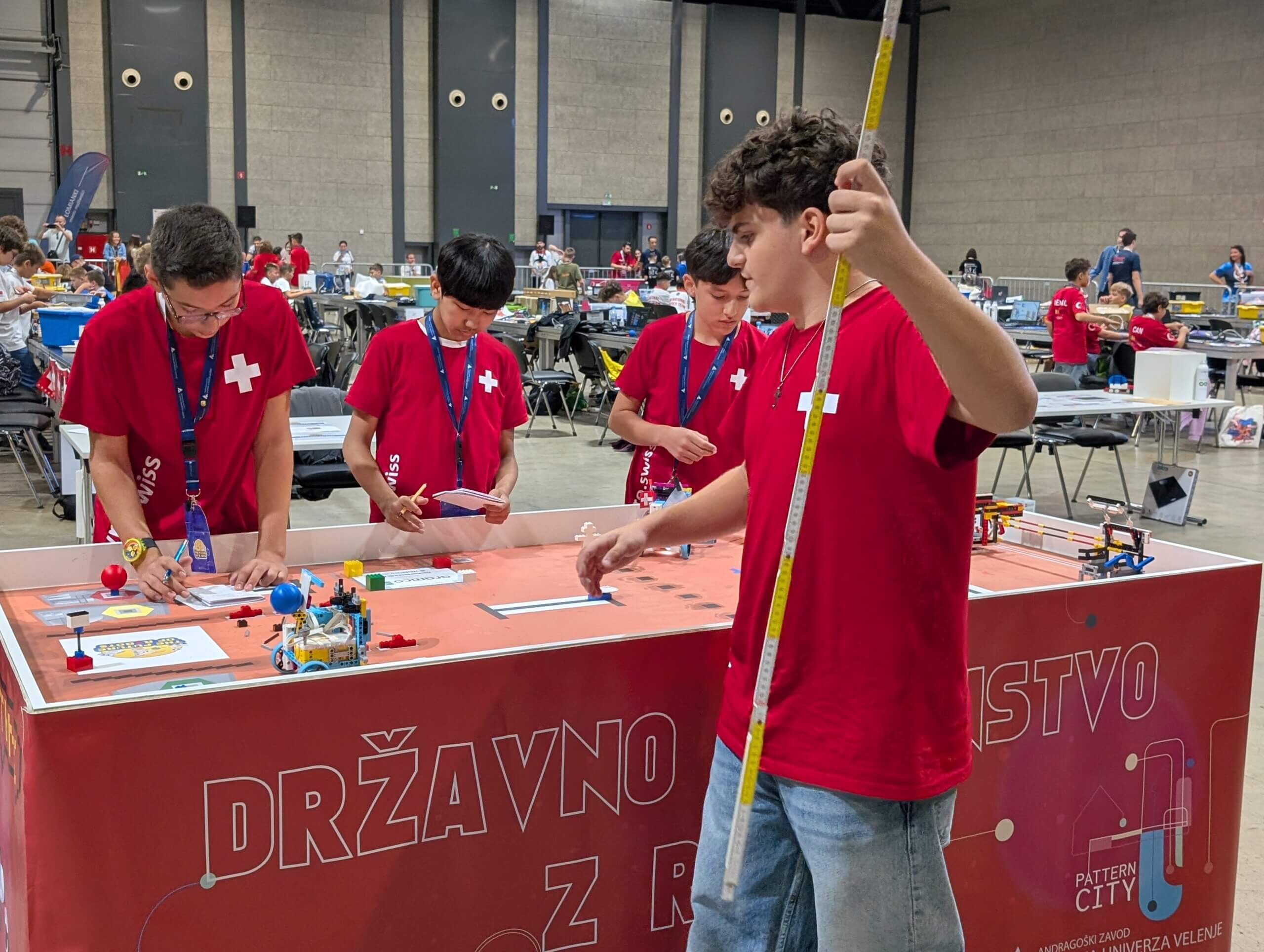
Six Swiss teams took part in the classic competition in the “RoboMission” category, where the robot has to solve tasks autonomously on an approx. 3m2 game field using Lego construction parts. On the first day of the competition, the aim was to solve the familiar tasks of this year’s “Mission” with random set-ups as quickly and as well as possible. Depending on the age group, the task was to put satellites into orbit, collect research samples or assemble rockets. Each group completes several rounds at the competition table, with a conversion and optimization phase scheduled between each round. The second day, on the other hand, poses completely new challenges for the teams: on this morning, they are given new tasks and have to adapt and reprogram their robots to these new scenarios in the shortest possible time. And the Swiss teams also achieved excellent results in this category: In addition to 3rd place for Team TopBoter from Eschenbach SG, all other Swiss teams also placed in the top half of the rankings. There is often a bit of luck involved, as Maximus Raymann (Team TopBoter) recalls: “During a test run, the robot took an unexpected path. This meant that we were suddenly able to solve another task.”
Intercultural exchange
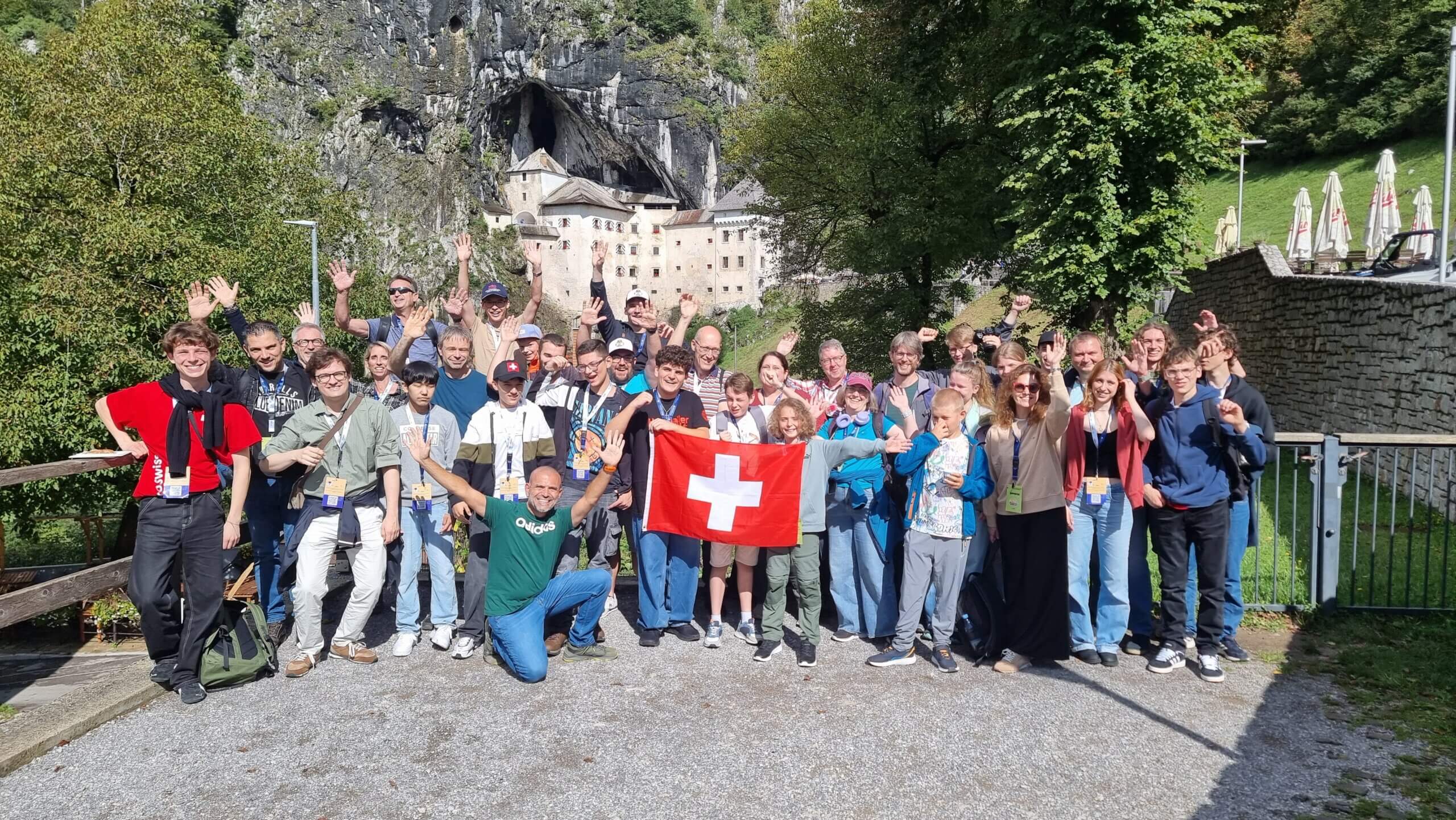
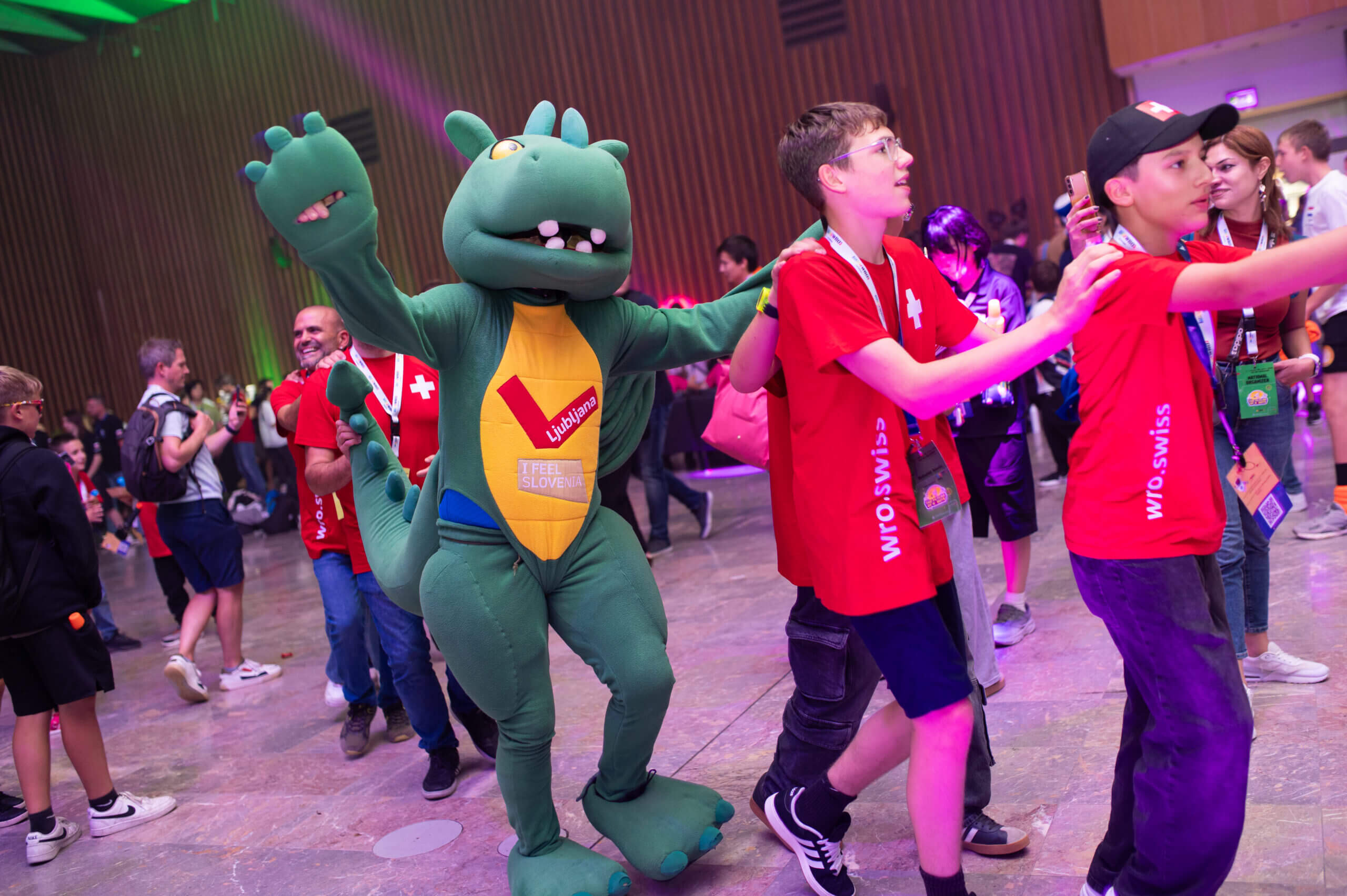
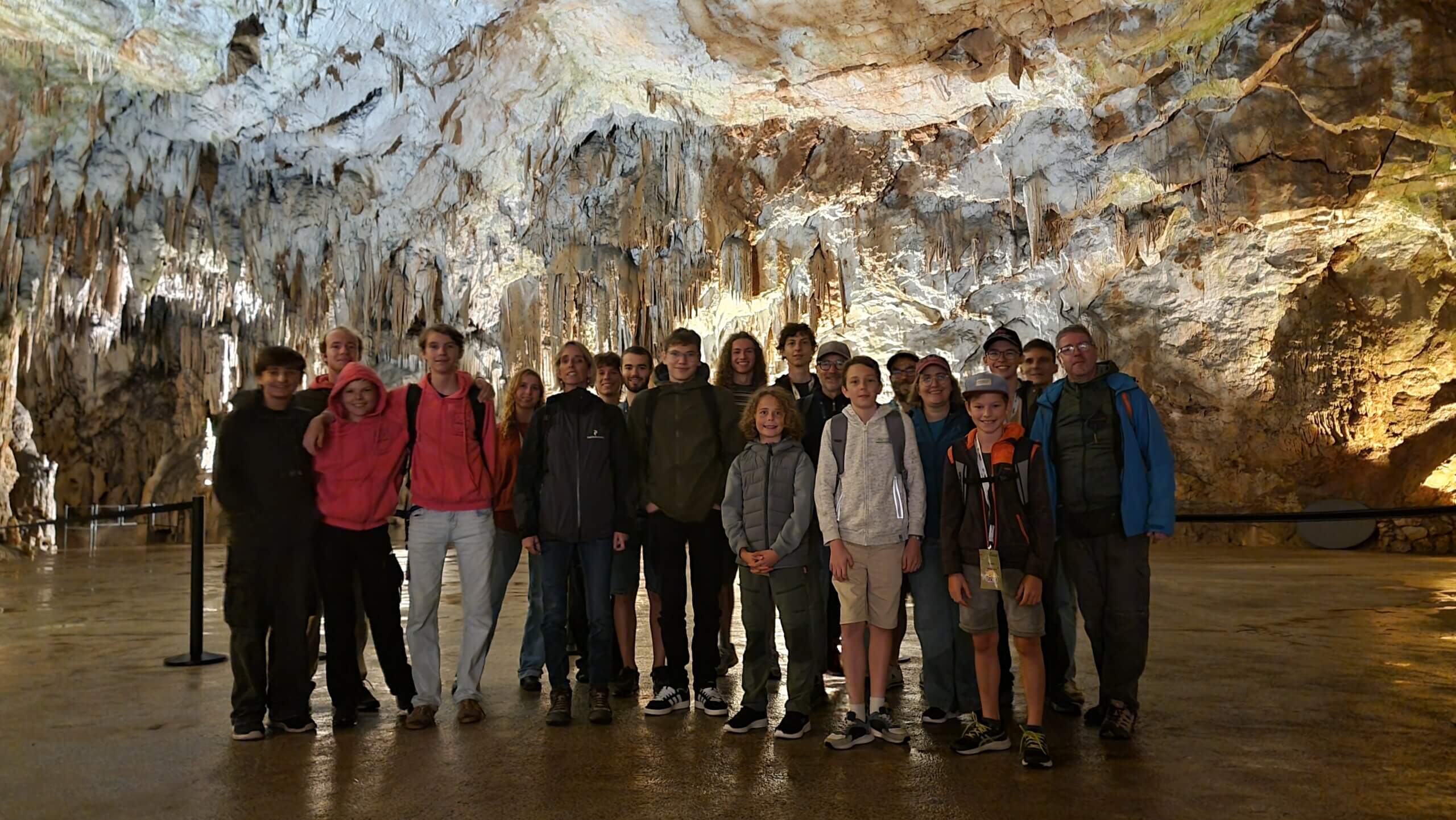
In addition to the hustle and bustle of the competition, there was also an opportunity for the participants from 35 countries to exchange ideas with each other and get to know the host country, Slovenia. To this end, the organizers arranged a great excursion to the Predjama cave castle and the huge Postojna Caves on the second day. Jakob Gutersohn comments: “The excursion to the Postjana Cave was impressive. Such a huge cave system is unique!” In the evening, the traditional “Friendship Night” took place, where the children and young people were able to get to know each other away from the competition and exchange many small gifts such as key rings, flags and sweets.
Summary of all rankings of the Swiss teams:
Category RoboMission
Elementary age group (8 to 12 years):
- 3rd place: Team TopBoter, Nico Bertschinger from Neuhaus SG and Maximus Raymann from St. Gallenkappel (Eschenbach SG schools)
- 12th place: Team Robomatik Robocraft, Erik Stutz from Arni AG (Arni elementary school) and Kyrill Muchilo from Mellingen AG (Mellingen elementary school)
Junior age group (11 to 15 years):
- 7th place: Team Techno Titans, Matias Senn and Namkha Mäntschung (Sekundarschule Walenbach, Wetzikon), both from Wetzikon ZH
- 14th place: Team Unimate, Alex Marino (Rüti Vocational School); Giuseppe Gallelli (Walenbach Secondary School, Wetzikon), both from Wetzikon ZH
Senior age group (14 to 19 years):
- 6th place: Team Mindstürmer, Nino Frey (Lucerne Vocational School); Jonathan Meier (Langenthal Vocational School), both from Roggwil BE
- 11th place: Team Balda7strich3, Simon and Svenja Felber (Kantonsschule Trogen), both from Speicher AR
Category Future Innovators
Senior age group (14 to 19 years):
- 1st place: Team overclocked, Hajna Julia Takats from Allschwil BL, David Bänziger from Basel BS and Anton Craddock from Riehen BS (Gymnasium am Münsterplatz, Basel)
- 3rd place: Team Kirchenfeld Robotics, Jakob Gutersohn and Valéry Piot (Gymnasium Kirchenfeld, Bern), both from Bern BE
Links
- Competition organizer Open Championship 2025 in Slovenia
- World Robot Olympiad Association (global umbrella organization)
- Complete rankings
- Zip archive with the images in high resolution These images may be used provided the photographer is credited (in the respective file name).
- this press release as PDF file
(Image: Alexander Hauschopp)
(Image: Spela Mohoric)
(Image: Alexander Hauschopp)
(Image: Bernhard Meier)
(Image: Markus Born)
(Leonhard Badenberg)
(Image: Bernhard Meier)
(Image: Hajna Julia Takats)
(Image: Markus Born)
(Image: Spela Mohoric)
(Image: Markus Born)
(Image: Markus Born)
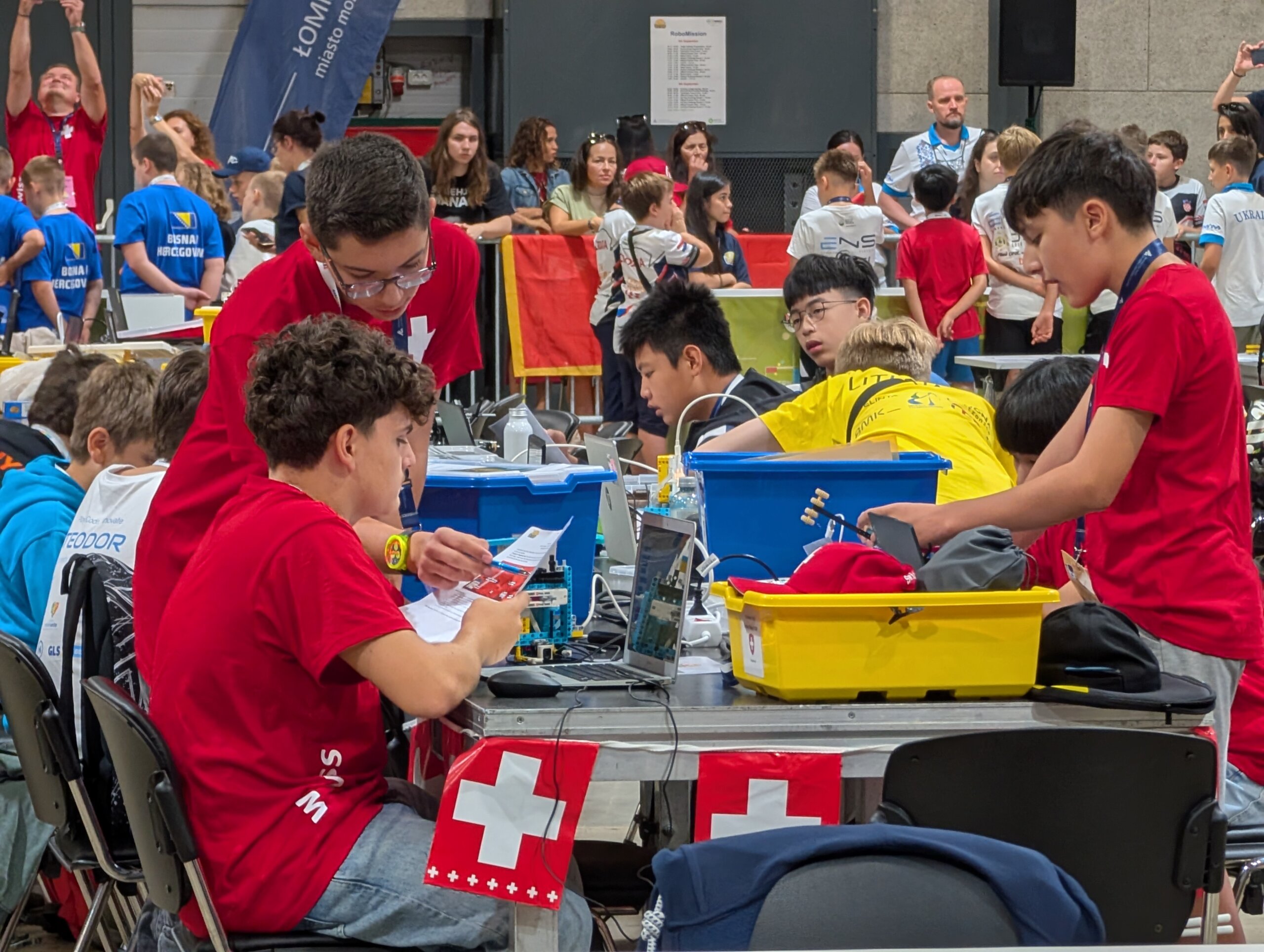
(Image: Bernhard Meier)
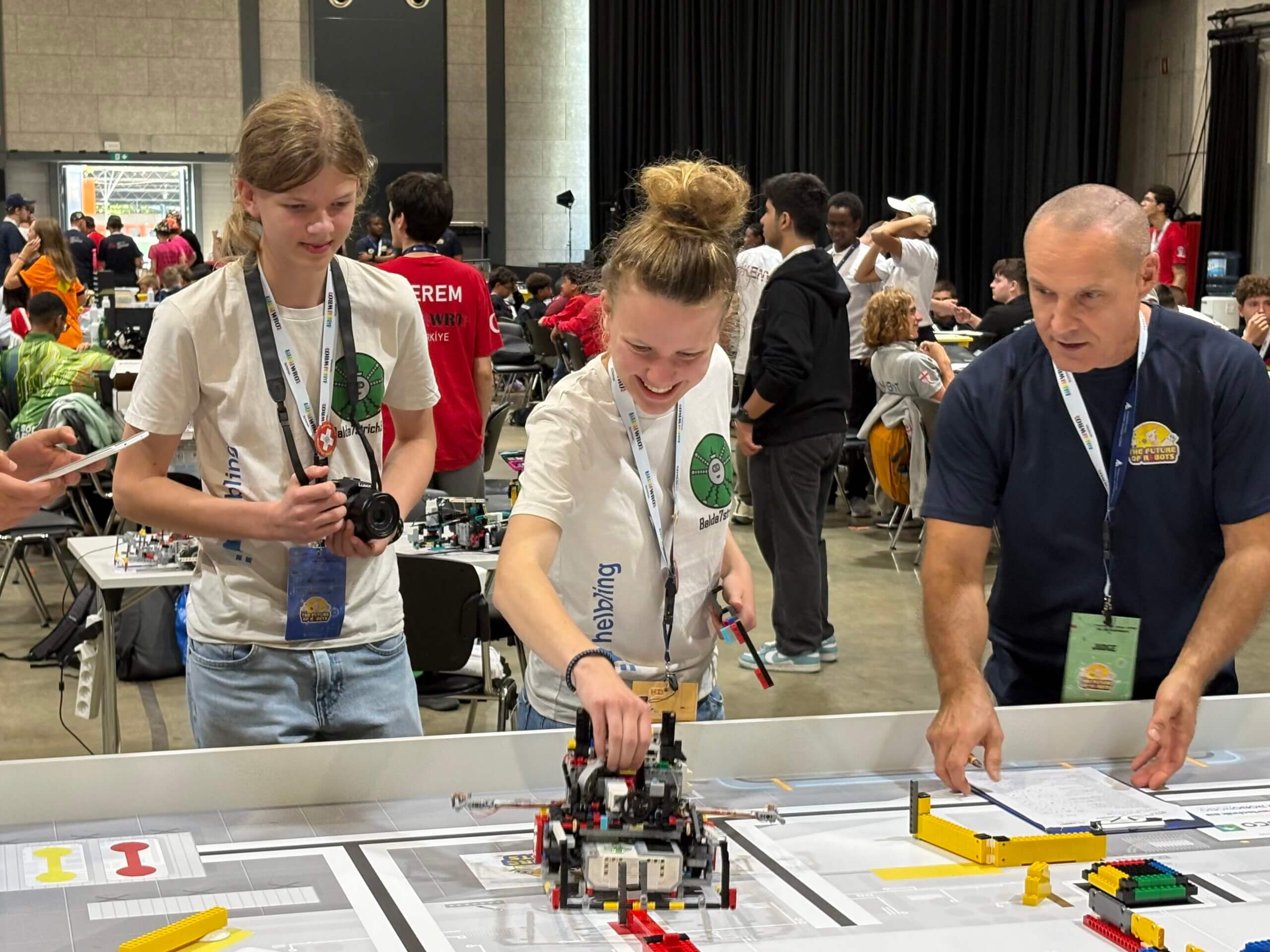
(Image: Matthias Felber)
The World Robot Olympiad is an international competition for children and young people. It has been taking place since 2004, each year in a different country. Switzerland has also been taking part since 2013. The WRO Switzerland association organizes the Olympiad on a voluntary basis. Since 2017, it has been a member of the Science Olympiad with its competitions in astronomy, biology, chemistry, geography, computer science, linguistics, mathematics, philosophy, physics and economics.
The topic of robotics and programming is not only part of Curriculum 21, but also an ideal game field for applied mathematics in the classroom from primary school onwards. The competition tasks are ideal for problem-based learning. This form of promoting young talent is intended to support STEM projects in schools and raise the profile of robotics and IT in Switzerland as a center of education. “The open-ended nature of the tasks, the project character and the diverse requirements make the “Future Innovators” category in particular very suitable for project-oriented teaching at all school levels,” explains Vera Hausherr, teacher and jury member for the Elementary age group.